|
|
 |
RECYCLING:
Reduce, Reuse, and Recycle
By Bhikshuni Heng Yi
Our planet is now undergoing a severe crisis. Everyday the human population produces a seemingly endless amount of garbage. We have been extracting resources and abusing materials from our mother earth for a long time. We have even created hazardous materials that are endangering people’s health. Indeed, the entire world has encountered a serious trash crisis! People can hardly find enough places for disposing composite. If we are continuously ignore it, we would soon be living in a ‘world of trash’!
“Separating our trash is everyone’s Responsibility!”
Recycling reduces the amount of trash and lower the cost of processing it. (Currently the cost of dumping it hygienically is on the rise).
Recycling protects the riches of our land resources.
Recycling safeguards our earth, water, forests and other natural resources.
Recycling creates a healthier and cleaner environment for everyone.
Recycling reduces pollution in general.The CTTB had begun its recycling program back in September 1990. Approximate two to three trucks of recyclables are delivered to recycling companies each month. Broadly speaking, overall residents at the CTTB already share a common outlook in terms of recycling and environmental protection. However, many visitors from different countries come to the City during special sessions and retreats. Through various medias, information and guidance are provided so that visitors will understand its importance and co-operate in all aspects.
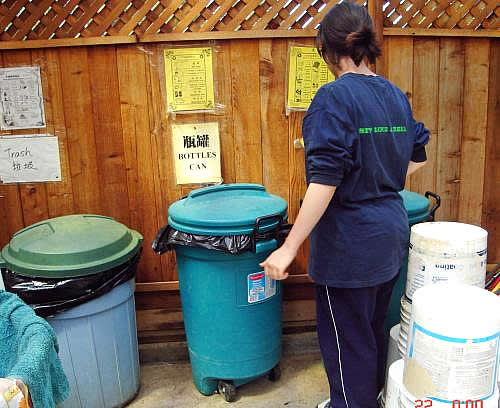
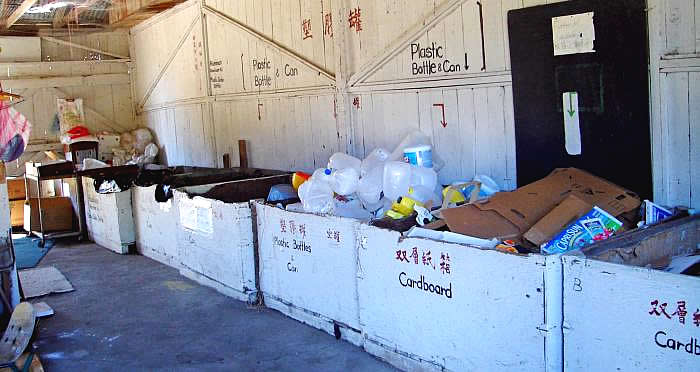
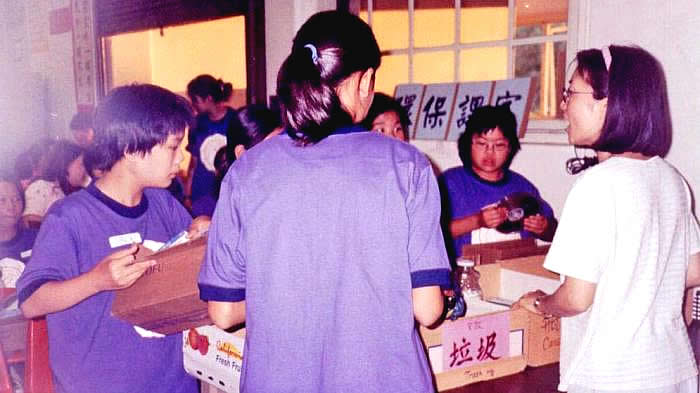
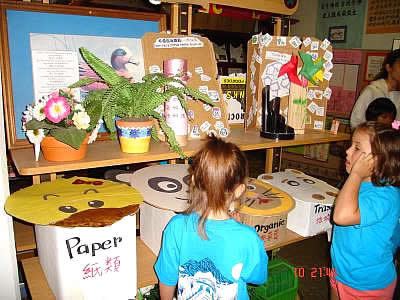
Besides making posters and notices, we had also set up the Environmental Protection Exhibition Center on June 30, 2001. By using new methods and new image for recycling, residents and visitors will develop a better understanding of environmental protection in supporting this cause. Here is the CTTB’s Environmental Protection Exhibition Center that is next to the Buddha Hall. If you come in through the main gate, you will first pass the Administration Office and keep on going you will see a very adorned and large Buddha statue on the top of the Buddha Hall. Then, turn left at the intersection in front of Instilling Goodness Elementary Girls’ School. The Center is there to your right.We have set up bins for recyclables and trash at eight main areas around the City. This is meant to make it easier for everyone to divide each one’s trash. These eight places are: Joyous Giving House (Nun’s Quarters), Administration Office (Reception Center), Blessings and Auspiciousness House, Seniors’ Home, uphill next to the laundry room, Environmental Protection Exhibition Center or Flower Arrangement Area, area outside of Jyun Kang Vegetarian Restaurant, and area outside the kitchen of the Dining Hall,and Budda Hall as well.
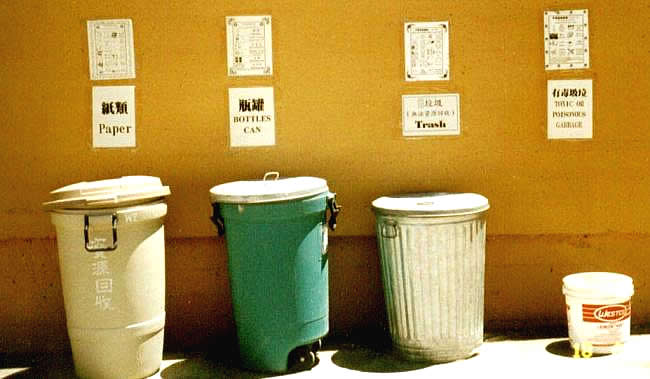
What is recycling? Recycling is to sort out the trash into different groupings, process them and use anything that can be used again. Iit is not difficult to do recycling. Just divide your trash into five major categories. Let’s take a look at these five categories of recyclables.
First: All kinds of papers. (It does NOT include used toilet paper!)
Second: Cans and bottles that have been rinsed.
Third: Biodegradables, such as fruit peels and vegetables that can be used as organic composite.
Fourth: Non-recyclables.
Lastly: Hazardous materials. (Because these items pollute our environment, they must be handled separately.)
Next, let’s take a closer look at how to sort trash into these five major categories.
First: Paper - Any used envelopes, writing papers, office papers, notebook papers, magazines, books, newspapers, phone books, boxes, paper containers, paper bags, and also cardboard tubes and rolls, recyclable plastic bags (clean soft bread bags and plastic bags labeled recyclable) all belong to this category.
Second: Bottles and cans
- Metal cans, such as those that hold preserved fruits, can be recycled after they are rinsed clean.
- Milk bottles and containers.
- Glass bottles
- Plastic bottles and typperware
- Aluminum cans, such as soda pop cans.
- Aluminum foil.
The above can all be recycled.
Third: Biodegradables - They can be used as organic composite. Some examples include fruit peels, pits, vegetable leaves, tea bags, peanut shells, seeds and those residues from plants and flowers, etc.
Let’s talk about the non-recyclables: Some paper cups and plates that we disposed after using are belonged to these group. Most of us think that it is very convenient to get rid of and very hygienic. In fact, we have to eliminate the chances of using disposable tableware. The reason is the more we use, the more trash produce. The best way is to buy some washable tableware.
Now we spend some time on discussing styrofoam to-go containers. We are better not to use them because they are toxic not only to our health but also not easily dissolved. It only causes more pollution problem to the world.
As to those used clothing, towels, shoes, clocks, pens and pencils, etc. are kinds of non-recyclables. Beyond these, there are plastic wrapping papers that are not stamped recyclable. Although they are beautiful and made of a tougher material, they cannot be recycled. What category do they belong to? Right, they are trash!
Flash lights, Kleenexes, toilet papers can only be handled as trash. Thermos, umbrellas, and dust, which are trash of course. Another category is porcelain tableware, etc. What would you do with these broken items? Yup, treat them like trash.The final category is the non-recyclable hazardous materials. We hope everyone will handle these carefully.
There are five kinds of hazardous materials, as follows:
1. Light bulbs, fluorescent lights.
2. Different kinds of battery.
3. Cans of paint not totally dried are considered hazardous material. But if they are dried, they may be treated as non-recyclable trash.
4. Chemicals and toxic cleaning agents (in aerosols or sprayers) such as hydrochloric acid, etc.
5. Used gasoline, pesticides and expired medication.
These five groups are hazardous materials.Guess what a typical garbage can contains?
Would you believe if I were to tell you that a full can contains only 9.4% real trash? Actually, in a typical can of trash, 42% of which are recyclable papers and cardboard; 23.4% are biodegradables such as bits and pieces of food, flowers and grass, etc.; 9.4% are glass bottles; 9.2% are metal and aluminum cans. 6.5% are other plastic materials. All of these can be reused. That is why we are left with only 9.4% real trash that should be tossed.
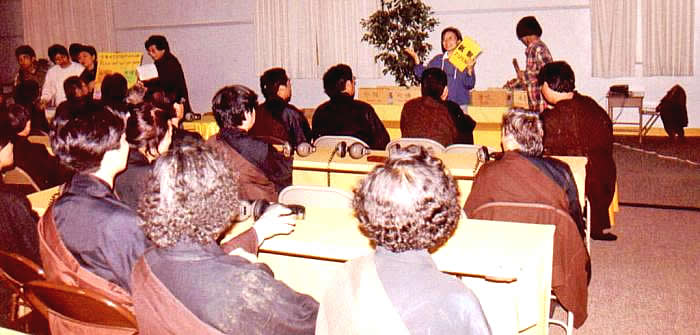
We use different languages to conduct classes on environmental protection for retreat participants and visiting groups. Some of these languages include English, Mandarin, Cantonese, Taiwanese, and Vietnamese as aforesaid.
Also, the City uses posters to teach its residents and visitors about environmental protection. For instance, we inform people about not purchasing foam tableware. We also suggest that people not waste their food and cherish their blessings. We broadcast a taped message during large gatherings at lunch, reminding everyone to finish all the food that he or she has taken.
Buddhists believe in cause and effect. If we carelessly waste or ruin our resources, in the future we will have an inadequate amount of resources. We should therefore develop the habit of using what we have and saving when we can.At the City, we often hold classes for students at Instilling Goodness Elementary and Developing Virtue Secondary Schools too. Students learn to love and protect our planet.
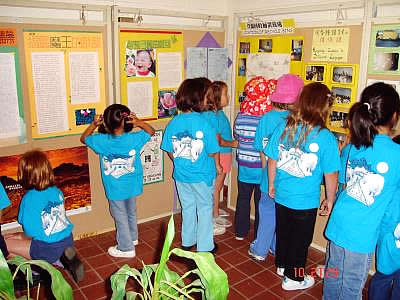
Saving mother earth and related books are things we collect. We also provide the latest information, books on freeing and protecting living beings and healthy vegetarian diets to teachers and students so that they understand their surroundings and problems on earth, and given the right opportunities, ways to help.
How do we save mother earth?
We usually teach the kids the 3 R’s
The 3 R’s are: Reduce, Reuse, and RecycleWe also often collect information on and related to how to be a caring consumer to teach kids the right consumer ideas, that is: if you know how to use your money, you are helping our planet!
How does that work? First, before you go shopping, consider these questions:
1. Do I really need this item?
2. Is this product recyclable?
3. Then ask yourself: Is this product durable?
4. After buying this item, do I need to put it in a plastic bag? Would it be better if I prepare my own shopping bag?While we are shopping, we should also pay attention to whether the product that we are buying had hurt any animals in its manufacturing process. We should all recognize this sign (a little bunny) that guarantees that the product that we being purchased has not been tested on animals. Any product with a little bunny on its label can be bought with a peace of mind. Of course, we want to remind you once again, before buying something, read the ingredients over carefully to see if it contains animal products.
Reuse: Many seemingly useless items can become beautiful pieces of art with some skilful handiwork.
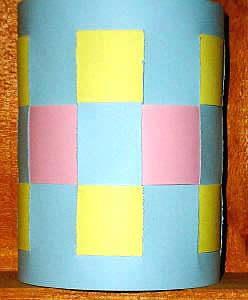
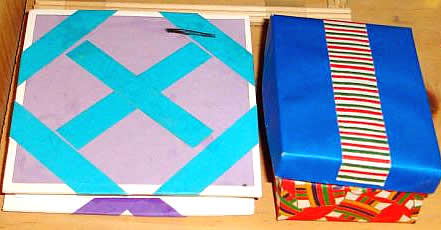
Take a look at these beautiful items below. Students from the Instilling Goodness Elementary and Developing Virtue Secondary Schools made them with left over wrapping paper and other materials. Aren’t the kids who made them creative?!
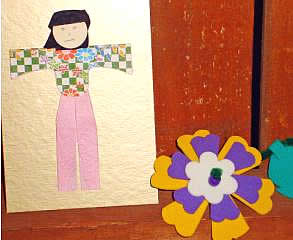
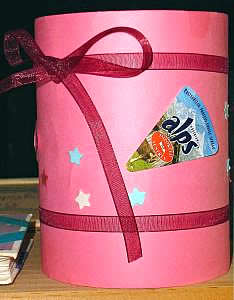
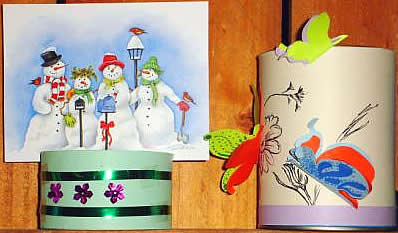
Wooden chopsticks that are tossed after being used once can become a pretty basket. This ornament can be hung nicely on the wall. With some creative work and patience, pop cans can turn into lovely little boxes. We can put staples, erasers, etc. in it.
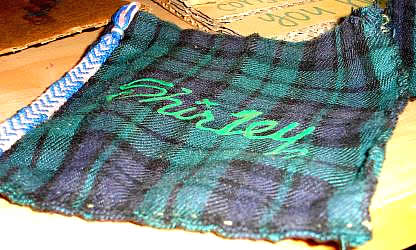
A girl's skirt for her school uniform was too long, so she cut off some fabric and made it into a jewelry box and a purse.
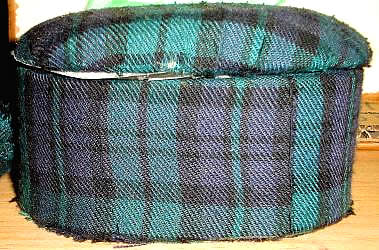
After touring this Environmental Protection Exhibition Center, we hope that everyone will put into practice what you have learned. Let’s act quickly. Let’s become happy soldiers in protecting the environment!
Together, let’s save our planet earth!