Using the Huatou "Who" Like the Vajra King's Sword
A Talk given by Will Liu on January 26, 2026
All Buddhas and Bodhisattvas, Venerable Master Hua, Greatly Compassionate Bodhisattva Avalokiteśvara, respected Dharma Masters, dear Dharma friends, Amitabha! Today, it is Qin Fa’s turn to tie Dharma affinity with everyone, learning how to speak dharma.
For me, the two most important Dharma events in CTTB every winter are the Amitābha Session and the Chan Session. Especially in this Dharma-ending age, when the world feels chaotic and unsettled, and people’s minds are constantly polluted and pulled by material desires, it feels so rare to still have a pure and peaceful place where people can still gather to recite the Buddha’s name, and then continue with a full three-week Chan session to sit and meditate. I suppose this is something that does not come easy in this human world today. Especially in this society we are living in, having all the right causes and conditions to hold and attend a complete Buddha-recitation session and a complete Chan session is not easy at all. This is beyond worldly fortune—this kind of opportunity and its value, is something that no amount of money can scale and exchange, it’s so precious and rare.
Although these two sessions are held every year at CTTB, I suppose this is only possible because of the blessings of the Buddhas and Bodhisattvas, because of the protection of the Dharma-protecting spirits, and the compassion and tireless efforts of all the Dharma Masters. Because of all this, I truly cherish and feel grateful for the opportunity to study and cultivate here on this pure land of CTTB. I’m also very thankful to the Dharma Masters who led the chanting and watched over the incense in the two dharma sessions, to those who worked every day in the dining hall to prepare nourishing meals for us, and to all the volunteers who quietly supported the daily functioning of the City. Without all of you, these sessions wouldn’t be possible. I sincerely wish that in the year 2026, all the Dharma Masters and everyone here will have good health, make progress in their practice, and continue moving forward on the Bodhi path. I also truly rejoice in the immeasurable merit and virtue of all the Dharma friends who came to the City to participate in this year’s Amitabha and Chan sessions. May we all realize the Way soon.
Today, I’d like to share some of my personal experiences from participating in this year’s Chan Session. If anything I say is of some use, I hope it can encourage us to support one another in our cultivation. And if anything I say is incorrect, I sincerely hope that everyone will generously share your own experience and help me in the right direction. This year was my third time attending the Chan Session. To be honest, I’m still very much a beginner—I really don’t know how to meditate. Every day, I was basically just following everyone else, going through the motions of walking meditation and sitting meditation together in the Chan Hall.
I remember very clearly that it wasn’t until the very last evening of the Chan Session, after the final sitting period had ended, that I suddenly realized, “Oh, I’m supposed to be investigating a huatou, the Chan topic.” So for almost the entire three weeks of sitting meditation, I actually wasn’t investigating a true topic at all. I didn’t really know what I was doing—probably just indulging in wandering thoughts the whole time.
But something strange happened. Even though I didn’t investigate a huatou during those 21 days, on that final night, after the very last sitting ended, a very strong thought suddenly arose in my mind—something I had never experienced before. All of a sudden, I really wanted to know: Who am I? I started asking myself, “Who is this ‘self’?” Who is this body? Who is this person, really? I don’t know why—during those three weeks, I never once deliberately tried to investigate the huatou like “Who is reciting the Buddha’s name?” But once the Chan Session was already over, I suddenly found myself asking: Who exactly am I? What is this that I call “myself”? At that moment, I wondered to myself: Is this what a huatou is? Is this what’s meant by a sense of doubt—yiqing? I honestly don’t know.
Something else also happened on the last day of the Chan Session—this was during a morning sitting. I didn’t really know why, but out of nowhere a wandering thought arose. What kind of wandering thought? I suddenly wanted to flash back through my life as much as I could still remember, from birth up to now, and let it replay itself in my mind like a movie. From elementary school, to middle school, high school, university; then after graduation, following my parents to live in Shenzhen, starting a family and building a career, and eventually coming to the City of Ten Thousand Buddhas. All of these life moments which I could still hold memory of, from more than forty years flashed in my mind one after one, in order of age. And I don’t know why I wanted to do that during that sit.
So at first, I saw the faces of a few classmates from my middle school, and clearly remembered what we used to do together. Seeing them, I felt as if I had returned to my teenage years, very funny, And then I saw how, after graduating from university, I found my first job in Shenzhen, how I moved to my second job, and later to a third company. Many scenes from work life just appeared as far as I remember, along with my life condition I had at the time. This also included some unhappy experiences that happened in my family during the three years before I came to the City. All of these memories as far as I remember appeared very vividly.
Finally, I saw myself coming to the United States because of the chance to study at Dharma Realm Buddhist University, and then, after graduating two years later, continue to volunteer at the City through OPT (Optional Practical Training). Every day at the City—I see myself waking up, washing my face and brushing my teeth, attending morning and evening ceremonies, going out to work, lining up in the dining hall for meals—all of these scenes continued to appear in my mind, right up to that very day when I was participating in the Chan Session.
I knew clearly that these were just wandering thoughts. But as I sat cross-legged in the Chan Hall, watching my life “short movie” that my own mind was projecting, a very strange thought arose at the same time—one that I felt I had to ask. Who exactly is the main character in all these scenes of my life? Although I know it was “me” who experienced all these life events from childhood until now, it also felt as if the “me” inside these memories was very hollow, there is no life to it AT ALL. So who is it, really? Who is it that made this “person” act and live through all these experiences from childhood to adulthood? It drove me nuts to find out who is behind this character. It felt just like right now, sitting here and speaking—I don’t even know who the person speaking right now is.
Coming back to the last day of the Chan Session—after the very final sitting in the evening ended—I suddenly realized that I had gone through three full weeks of Chan without really investigating a single genuine huatou. Part of me felt incredibly foolish. But right after that realization—maybe because earlier that day I had replayed so many scenes from my life in my mind—before I even left the Chan Hall, a very strong feeling arose. I suddenly felt extremely empty. It felt as if, from my birth until now, I had been living like some kind of machine that just keeps running on its own, endlessly and automatically without anyone really starting it at the beginning.
At that moment, I felt an intense need to know: Who exactly is this “me”? What is this thing, really? Who is it that’s inside this body? Who is it that’s driving this body to do all kinds of things every day from birth up until now. And, all of this is being done for whom? Is it for “myself”? But then—who is that “self”?
So, right after the last sitting ended, I really wanted to find the answer to this question. Unfortunately, that night also marked the end of the 21-day Chan Session, and I wasn’t allowed to go back into the Chan Hall to sit and investigate anymore. So I thought to myself: well, it looks like from now on I’ll have to return to my own room, keep sitting, and continue trying to find out who this “me” really is. So in a way, I was quite foolish. During the entire Chan Session I never thought to investigate a huatou. Only after all three weeks were over did I suddenly remember to ask, “Who am I?” So from here on, I can only continue to look for “who this me really is”—on my own.So even though the Chan Session has ended, over these past few days I’ve still been practicing sitting in my own room. This time, I’ve really started trying to look for who this “me” is. At the same time, I also didn’t want it to be simply “over” once the Chan session ended—that after finishing these 21days, I would stop sitting, stop investigating Chan for the next whole year, and just leave all the memories of the Chan Session behind on the second floor of the Tathāgata Monastery, waiting until next year to pick them up again. Like, I remember one day in the Chan session, I even had a wandering thought and asked myself: What is Chan, really? Is Chan just sitting in the Chan Hall at the Tathāgata Monastery—crossing my legs, straightening my back, closing the eyes—and that’s the beginning of Chan, and then when the bell is struck an hour later, Chan is over? Is Chan simply a once-a-year, 21-day experience? If that is all it is, then isn’t it just like going to Disneyland for an experience—leaving behind nothing but a memory, without bringing the true benefits of Chan into daily life?
As Dharma Master Yongjia said in his “Song of Enlightenment”: “Walking is Chan, sitting is Chan; speaking or silent, moving or still, the essence is always at ease.”
Venerable Master also explained that a person who truly investigates Chan, no matter walking, standing, sitting, and lying down, he/she always remains in a meditative state. This is what it means to integrate Chan into everyday life.
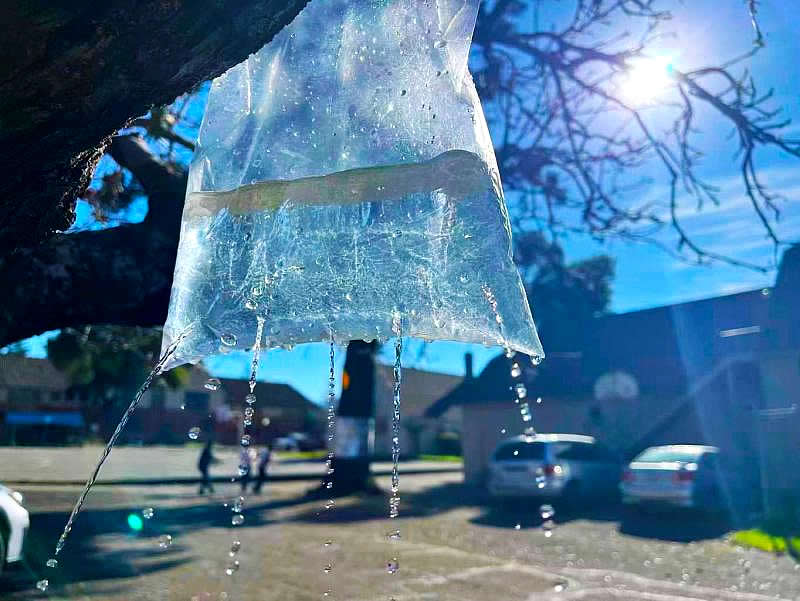
So after sitting these days and tasting what it is like to investigate the huatou, I realized something about myself: that is, the light of my life is leaking every single day. I use the term “life light”—ming guang: ming as life in Chinese, and guang as light in Chinese. From childhood until now, the mental energy and vitality of my life have constantly been flowing outward through the six roots, chasing after the six sense objects. Little by little, it just keeps leaking away. But I found that if I truly investigate the huatou “Who?”, this leaking can gradually be sealed. That’s why it’s best to investigate the huatou vigorously while sitting in meditation—because when we’re sitting, the body and mind are relatively still, and the six roots are less agitated, the investigating work will become effective. But, even in daily life, at every moment, we can still remind ourselves to bring up the question, “Who am I?”
I even feel that from the very first thought after waking up—once our awareness returns from sleeping—we can use that very first thought to begin asking, “Who is this guy waking up?” We can observe our thoughts as they arise, and watch every movement and action, always placing this “Who?” in the first position. Genuinely and sincerely, from the depths of the heart, we want to know who exactly this person is. Who is this being that has the ability to see, hear, and be aware? In daily life, no matter what we are doing, we can first bring up “Who?” and investigate it for a moment. Because I’ve noticed that the moment I investigate “Who?”, my wandering thoughts settle down for a while—as if the mind suddenly pauses, waiting to be checked. If I don’t investigate, then for most people, the entire day is spent being dragged around by wandering thoughts—leading us to crash into walls everywhere. When the thoughts tell you to cry, you cry. When they tell you to laugh, you laugh. When they tell you to be afflicted, you’re afflicted. There is no real control at all.
So for me, investigating a huatou means finding the head of wandering thoughts. A huatou is like a Vajra King sword. The moment you bring up the huatou and investigate it, you can locate the head of the wandering thought, and with one stroke, cut it off, so it can’t continue creating trouble for you. I feel that our wandering thoughts are a bit like a fly, buzzing around everywhere all day long, landing on unclean places, rubbing its hands and feet there. Investigating the huatou is like cutting off the head of that wandering-thought fly. Even though a headless fly may still flutter around for a short while, sooner or later, it falls to the ground and becomes completely dead. Just to be clear, I’m talking about a wandering-thought fly, not a real fly. I wouldn’t actually go around killing flies. But as for these wandering-thought flies, if I can cut off as many as possible, I’m more than willing to do so.
That’s how I understand investigating a huatou. At the beginning, once a little bit of inquiry of questioning “who” starts to arise, it often turns into a tug-of-war with wandering thoughts. At first, you may not be able to hold the huatou for very long, and you don’t necessarily win—you get pulled back over to the side of wandering thoughts. But I feel that if a person has patience, and over time, through sitting and Chan practice, keeps the Vajra sword of “Who?” firmly in hand—placing “Who?” first at all times, whether walking, standing, sitting, or lying down—then something awesome seems to begin to appear naturally. It’s as if an inherent, brilliant, originally-present steadiness of mind starts to reveal itself on its own.
Investigating the single-word huatou of “Who?” is also a bit like this. Imagine you’re alone at home late at night. It’s two o’clock in the morning, everything is quiet, pitch dark, and no one else is there. Suddenly, a stranger sneaks into your house. It could be a thief, or someone with even worse intentions. You hear a sound coming from the living room. You’re scared, so you suddenly shout out loudly: “Who?!” The moment the intruder hears that, he realizes there’s someone in the house. Afraid of being exposed, he’s so frightened that he doesn’t dare make a sound or move at all. After a while, you listen intensively and hear nothing and when it’s completely quiet. Only then do you go out to the living room, turn on the light, and see that there’s no one there—the thief has already run away.
I feel that wandering thoughts are just like that thief who sneaks into the house of our own true nature in the middle of the night. He often comes to visit, stealing the precious treasures of our self-nature. In fact, it’s us ourselves who leave six doors—our eyes, ears, nose, tongue, body, and mind— wide open for him every day, letting the thief of wandering thoughts freely enter our home and rob our inner treasures every day and night. But I feel that, while walking, standing, sitting, or lying down, if we can train ourselves to always bring up this huatou “Who?” and place it in front, then those six doors of our self-nature naturally begin to close. The moment the thief of wandering thoughts hears someone shout “Who?”, he’s so frightened that he doesn’t dare move. And when we look again a moment later, the wandering thought has already vanished—like a cloud disappearing into the clear sky.
I wonder if people still remember that in the Śūraṅgama Sūtra, our Original Teacher, Śākyamuni Buddha, specifically uses the metaphor of a “thief” to describe how our false, deluded thinking mind steals the treasures of our own true nature? Here are those lines.
The Buddha says to Ānanda:
“Ānanda, this is the illusory false thinking based on external sense objects. It confuses your true nature. From beginningless time until this very life, you have mistaken a thief for your own child, lost what is originally constant within you, and therefore undergo the cycle of rebirth.” (Roll 1)At one place in the sutra the Buddha also told Ānanda:
“Thus, what are present before you now—the eyes, ears, nose, tongue, along with the body and mind—serve as six intermediaries for the thief. They plunder the treasures of your own household. Because of this, from beginningless time, beings in the world are bound by birth, and cannot transcend the material world.” (Roll 4)Idle thoughts are a stumbling block to getting enlightened. Investigating “Who is reciting the Buddha’s name?” is a Vajra-king sword which can cut through all idle thoughts. When Śākyamuni Buddha first accomplished Right Enlightenment beneath the Bodhi Tree, he said, “How wonderful, how wonderful! All living beings, without exception, possess the wisdom and virtuous characteristics of the Tathagata (the Buddha). It is because of their idle thoughts and attachments that they cannot certify to them.” The Buddha clearly told us why we can’t become Buddhas. It’s simply because of our idle thoughts and attachments. So we must break through these idle thoughts and attachments. How do we break through them? We use the word “Who?” We drill down into it, drilling until the truth is brought to light. That’s when we succeed.
Finally, I’d like to say that Chan practice can help us digest the questions that are difficult to understand when we read the sutras, and in turn, reading the sutras can help support our meditation and deepen our concentration. This is something I’ve personally experienced very clearly—especially with reading the Śūraṅgama Sūtra alongside sitting meditation.
To conclude, I’d like to share an image that I took, inspired by my experience with investigating the huatou. It’s a picture that I think many of us can understand as soon as we see it. I’ve titled it “Leak.”
I sincerely wish that in 2026, each and every one of us will be able to firmly raise this Vajra King sword, cut through the ignorance and deluded thoughts within our own self-nature, and allow our six faculties to no longer leak away.May we all become like the Buddha—body and mind perfectly illuminated, unmoving in the Bodhi field, able within a single hair-tip to encompass and contain the lands of the ten directions. (Śūraṅgama Sūtra, Roll 2)
Amitābha.